
Los almacenes con estructura de acero, con sus robustas estructuras y espaciosas distribuciones, se han convertido en una opción común para el almacenamiento industrial moderno y las operaciones logísticas eficientes. Sin embargo, la conductividad acústica inherente a los materiales metálicos plantea importantes problemas de ruido para estos edificios. El ruido constante de los equipos internos, el movimiento frecuente de las carretillas elevadoras y las colisiones durante la carga y descarga de mercancías no solo perturban el entorno, sino que también afectan directamente la eficiencia operativa y la comodidad del personal dentro del almacén. Para abordar este problema común, cada vez más proyectos recurren a los paneles de lana de roca, una solución que equilibra la eficacia técnica y la rentabilidad. Gracias a su estructura y propiedades únicas, se está convirtiendo en la opción ideal para lograr un aislamiento acústico de alto rendimiento en almacenes con estructura de acero.
¿Cómo funciona la lana de roca? Paneles ¿Aislar el sonido?
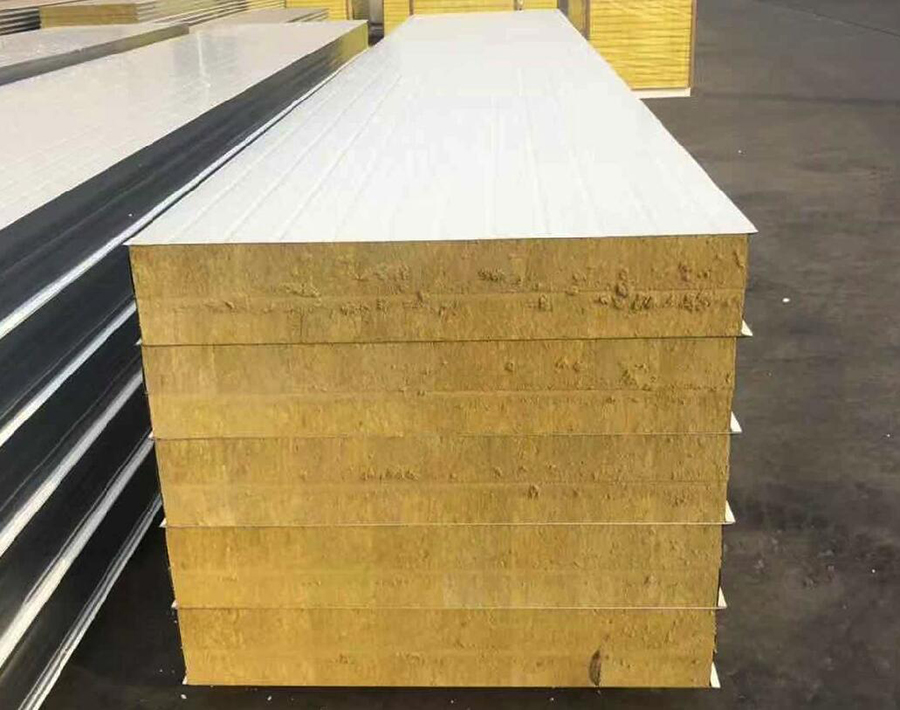
El tablero de lana de roca se fabrica fundiendo rocas naturales como el basalto a altas temperaturas y transformándolas en hebras fibrosas, lo que da como resultado una estructura interna densa y porosa. Cuando las ondas sonoras entran, se reflejan repetidamente dentro de estos poros microscópicos e interactúan por fricción con las fibras de lana de roca, convirtiendo gradualmente la energía sonora en energía térmica. Este doble mecanismo de absorción acústica y bloqueo estructural suprime eficazmente la transmisión del ruido, lo que lo hace especialmente adecuado para abordar la transmisión sonora inducida por vibraciones rígidas, común en almacenes con estructuras de acero.
Ventajas del uso de paneles de lana de roca para el aislamiento acústico en naves con estructuras de acero
 ☆Excelente rendimiento de aislamiento acústico
Una sola capa de tablero sándwich de lana de roca de 50 mm de espesor puede reducir el ruido entre 15 y 25 decibeles. , comparable a la transición de una carretera ruidosa a un entorno de oficina tranquilo.
Con un diseño de tablero de doble capa que incorpora una cavidad de aire, el aislamiento acústico puede alcanzar los 30-40 decibeles, cumpliendo totalmente con los estándares nacionales para el control del ruido de fábrica.
☆Clasificación más alta de resistencia al fuego: Clase A
Como material de base mineral, la lana de roca es intrínsecamente incombustible. Incluso expuesta a temperaturas superiores a 1000 °C, se funde en lugar de arder. En caso de incendio relacionado con equipos dentro de un almacén, no contribuye a la propagación de las llamas y cumple con las normas internacionales de seguridad contra incendios más estrictas.
☆Duradero y adaptable
Resistencia a la humedad: Los tableros de lana de roca especialmente impermeabilizados presentan una absorción de agua extremadamente baja, lo que los hace adecuados para uso a largo plazo en regiones húmedas del sur o instalaciones de almacenamiento frigorífico.
Resistencia al envejecimiento: La estructura estable de fibra inorgánica evita el crecimiento de moho y la infestación de plagas, lo que garantiza una vida útil de más de 20 años.
Ligero pero robusto: con una densidad moderada, no aumenta significativamente la carga estructural en los almacenes al tiempo que ofrece resistencia al impacto, lo que lo hace adecuado para entornos con operaciones frecuentes de montacargas.
☆Ecológico y seguro para la salud
Libre de sustancias nocivas como formaldehído y amianto, cumple con certificaciones medioambientales internacionales.
El proceso de producción tiene bajas emisiones de carbono y el material es reciclable después de su uso, en línea con las tendencias mundiales de construcción ecológica.
Aplicaciones de los paneles de lana de roca para el aislamiento acústico en naves de estructura de acero
 ☆Almacenes de fabricación industrial
En almacenes de taller con equipos de alto nivel de ruido, como operaciones de mecanizado y prensado, la instalación de paneles de lana de roca en paredes y techos absorbe significativamente el ruido mecánico, protege la audición de los trabajadores y mejora el entorno de trabajo.
☆Almacenes de tránsito logístico
El ruido interno proveniente de carretillas elevadoras, maquinaria de manipulación de carga y embalaje suele causar molestias en la comunidad debido a su proximidad a zonas residenciales. La construcción de muros insonorizantes con paneles de lana de roca bloquea eficazmente la transmisión del ruido y reduce las quejas.
☆Almacenes de construcción temporales
Para almacenes de obra temporales cerca de áreas residenciales o sensibles al ruido, los paneles sándwich de lana de roca se pueden ensamblar rápidamente como recintos para suprimir eficazmente la difusión del ruido de la construcción, satisfaciendo así las necesidades de reducción de ruido a corto plazo.
☆Instalaciones de almacenamiento de cadena de frío
Los paneles de lana de roca mantienen un aislamiento acústico estable en entornos de baja temperatura sin comprometer los sistemas de aislamiento térmico existentes. Son adecuados para entornos de almacenamiento en frío, ya que integran funciones de aislamiento acústico y térmico.
Consideraciones de instalación para paneles de lana de roca en almacenes con estructuras de acero
Para garantizar la eficacia del aislamiento acústico y la fiabilidad a largo plazo, se deben tener en cuenta los siguientes puntos de instalación:
☆Selección del espesor según el entorno de ruido
Se recomienda elegir el espesor del tablero de lana de roca según la intensidad del ruido real:
Zonas de alto ruido (por ejemplo, zonas de equipos, áreas de procesamiento): se recomiendan placas de 100 mm de espesor.
Áreas de almacenamiento general o de oficina: un espesor de 50 mm suele ser suficiente.
☆Métodos de instalación para evitar "puentes de sonido"
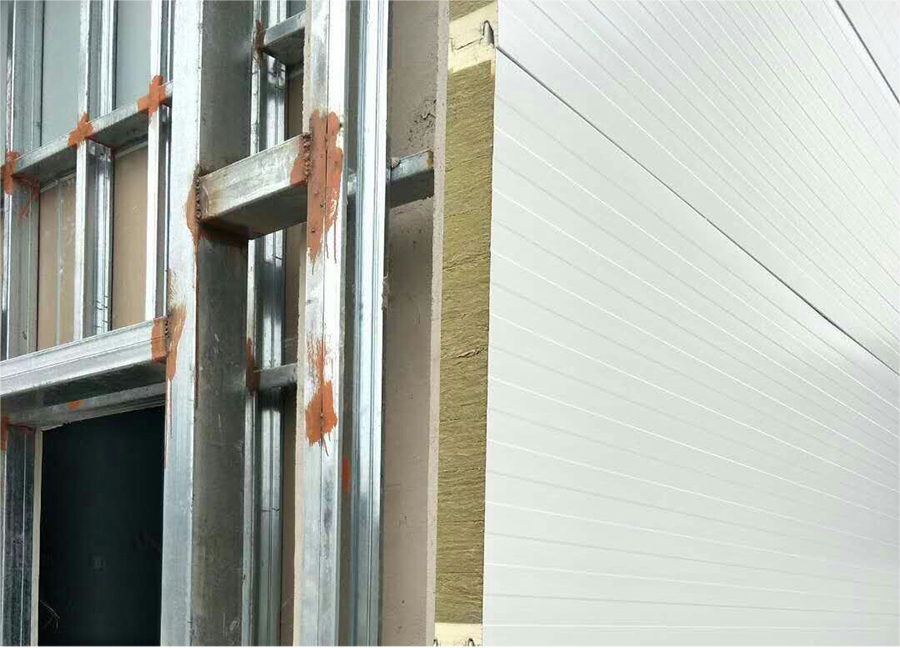
Utilice sistemas de estructura metálica especializados o adhesivos estructurales para la fijación.
Todas las juntas, bordes y penetraciones de los tableros deben estar completamente sellados con selladores elásticos.
Evite las conexiones rígidas que transmiten directamente las vibraciones para garantizar un aislamiento acústico continuo.
☆Acabado de superficies para funcionalidad y estética
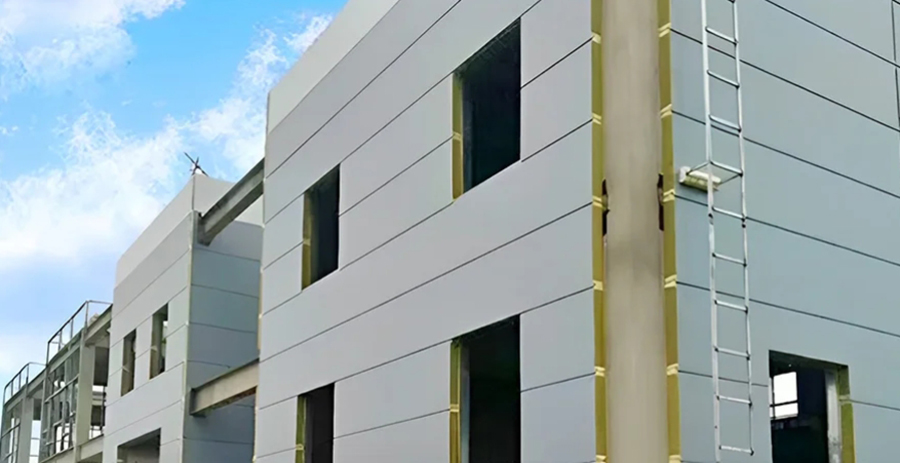
Las superficies exteriores deben cubrirse con un revestimiento resistente a la intemperie, como láminas de acero de color, para mejorar la durabilidad.
Las superficies interiores se pueden combinar con materiales decorativos como yeso o paneles de metal para formar un sistema de pared completo.
Durante la instalación, asegúrese de la integridad de la capa de lana de roca para evitar compresiones o daños que puedan comprometer el rendimiento del aislamiento acústico.
☆Recomendaciones adicionales
Antes de la instalación, inspeccione la planitud y el tratamiento anticorrosión del sustrato de la estructura de acero.
En ambientes húmedos, opte por paneles de lana de roca hidrófobos e implemente medidas de protección contra la humedad antes y después de la instalación.
Para detalles estructurales complejos, prepare dibujos de construcción especializados para garantizar la precisión.
A través de la selección científica de materiales y una instalación meticulosa, los sistemas de aislamiento acústico de paneles de lana de roca no solo controlan eficazmente el ruido, sino que también funcionan sinérgicamente con los almacenes con estructura de acero para lograr un rendimiento duradero y confiable.
Para almacenes con estructura de acero, el tablero de lana de roca trasciende su función de simple aislamiento acústico. Representa una solución integral que combina seguridad, durabilidad y sostenibilidad ambiental. Ya sea para mitigar el ruido interno de los equipos, bloquear las perturbaciones externas o cumplir con las estrictas normas de seguridad contra incendios y construcción ecológica, el tablero de lana de roca ofrece una opción rentable y preparada para el futuro de los espacios de almacenamiento industrial modernos.
Desde la conversión de la energía acústica en calor hasta su función como barrera de seguridad contra incendios, y desde el mantenimiento del rendimiento en condiciones de humedad hasta el apoyo a la responsabilidad ambiental durante todo su ciclo de vida, los paneles de lana de roca responden a necesidades prácticas con innovación tecnológica. A medida que los almacenes con estructura de acero evolucionan hacia una mayor eficiencia, facilidad de uso y sostenibilidad, la selección de un sistema adecuado de paneles de lana de roca no es solo una respuesta a los desafíos del ruido, sino una inversión con visión de futuro en seguridad espacial, eficiencia operativa y gestión ambiental.
Si tienes alguna pregunta , ¡Póngase en contacto con el equipo de Yumisteel para obtener soluciones personalizadas! ¡Gracias!
años de experiencia



 Servicio en línea
 +86-592-6095031
 manager@yumisteel.com
 Alina_Yuki
 +8613559086380+8615860744964
 español
 English
 русский
 português
 日本語
日本語