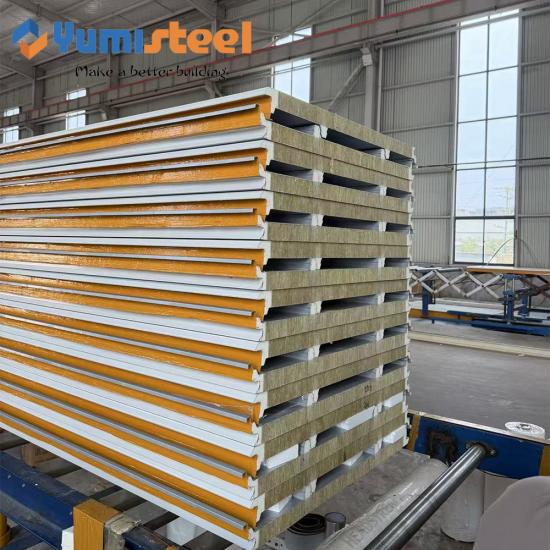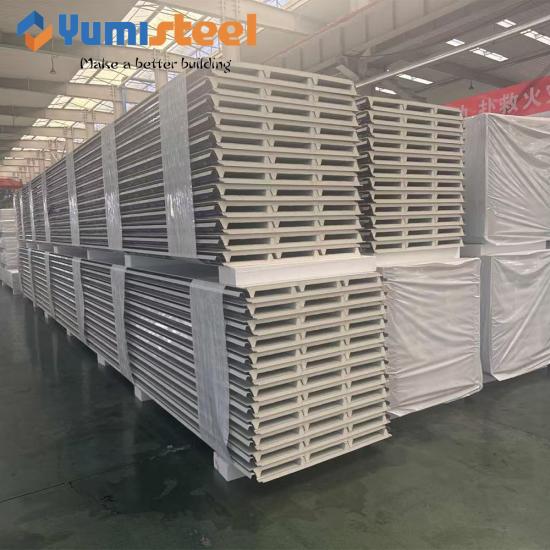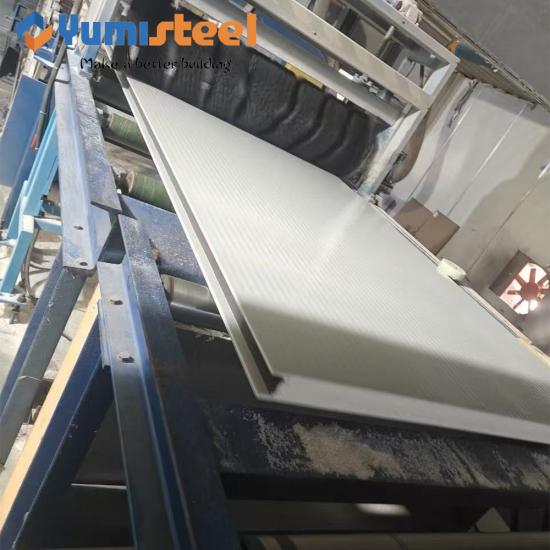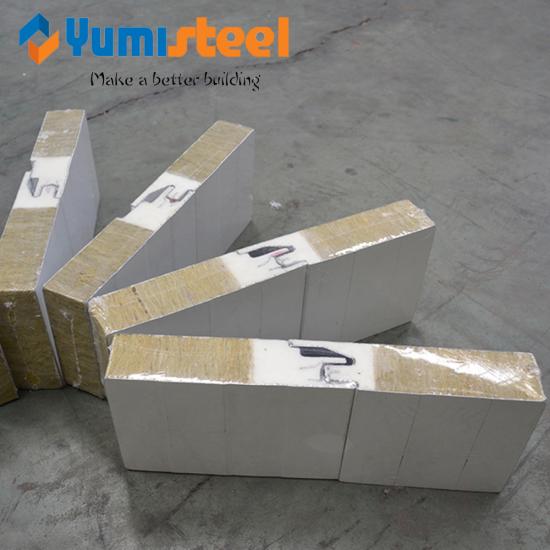

En la ingeniería de la construcción moderna, la elección de materiales influye directamente en el rendimiento, el coste y la vida útil de un edificio. Los paneles sándwich y las chapas de acero prelacado son dos materiales comunes para la envolvente de edificios, que se mencionan con frecuencia pero que a menudo se confunden. Si bien las chapas de acero prelacado son la capa superficial común en ambos, los paneles sándwich, debido a su estructura compuesta única, presentan ventajas de rendimiento claramente diferentes en términos de aislamiento térmico, aislamiento contra el calor y resistencia. Este artículo profundizará en las diferencias estructurales entre ambos y analizará sus diferentes escenarios de aplicación en la construcción.
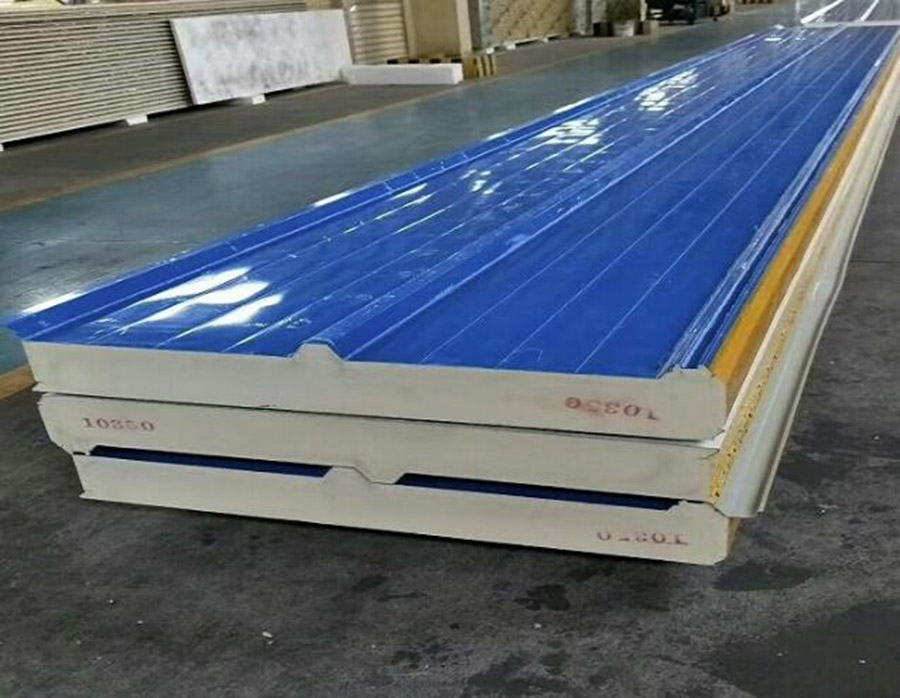
Paneles sándwich
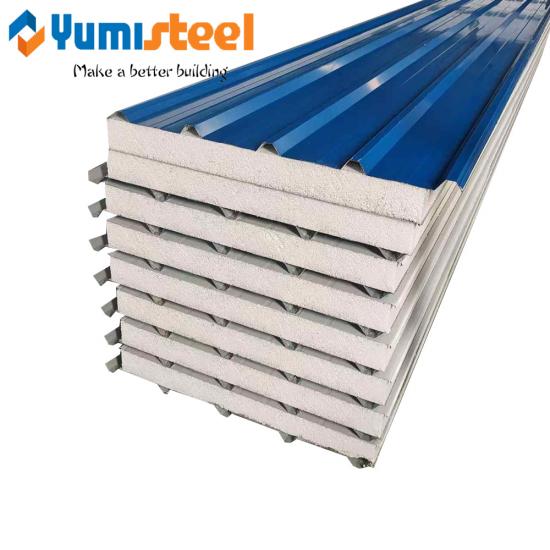
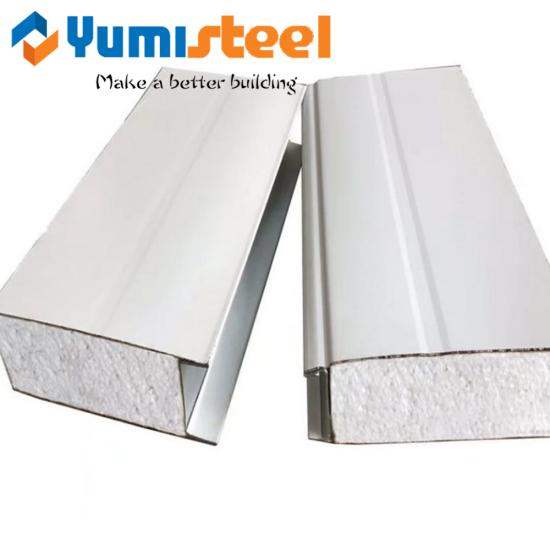
Se trata de paneles compuestos formados por dos capas de láminas metálicas con recubrimiento de color como capa superficial, rellenas con diferentes tipos de materiales de núcleo (como lana de roca, poliuretano, EPS, etc.). Su rendimiento varía según el material del núcleo, cuyas ventajas incluyen aislamiento térmico, estabilidad estructural y propiedades impermeables.
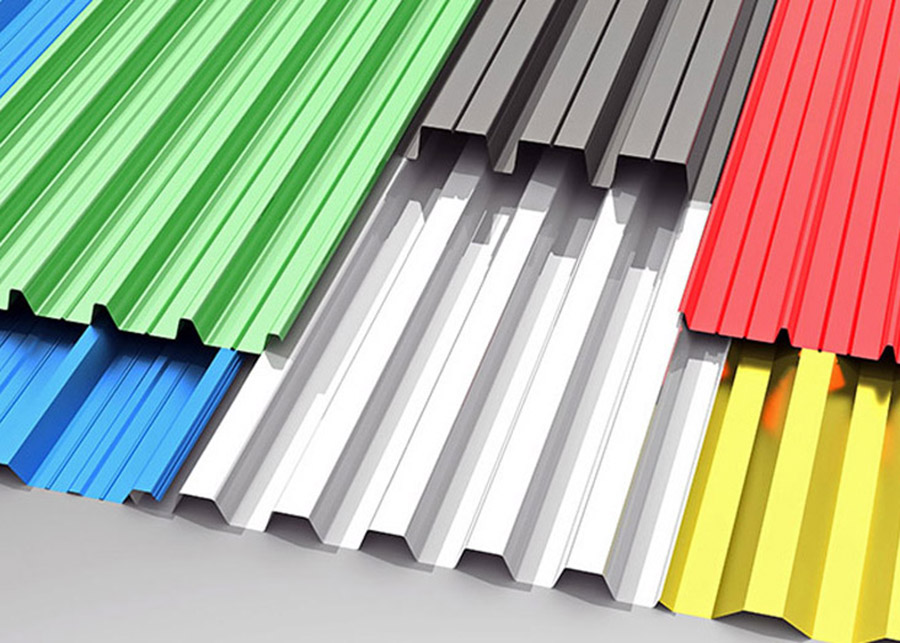
Chapa de acero coloreada
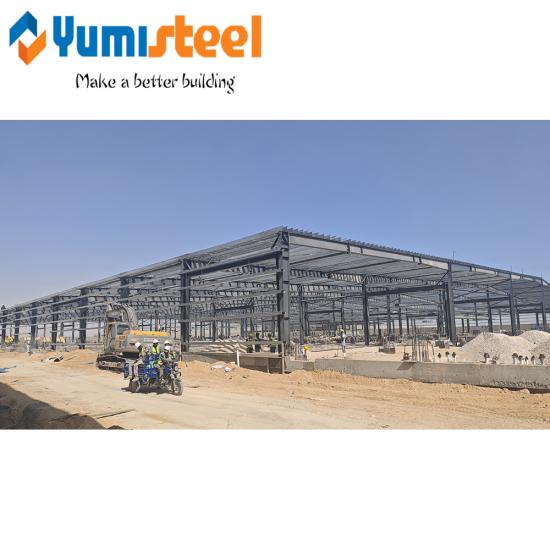
Se trata de láminas de acero monocapa con recubrimiento de color, utilizadas principalmente en edificios con estructura de acero. Sus principales ventajas son la alta eficiencia constructiva, el bajo costo y la flexibilidad en el ajuste de dimensiones según los requisitos del edificio. Se suelen emplear en construcciones donde la resistencia a altas temperaturas no es una prioridad.
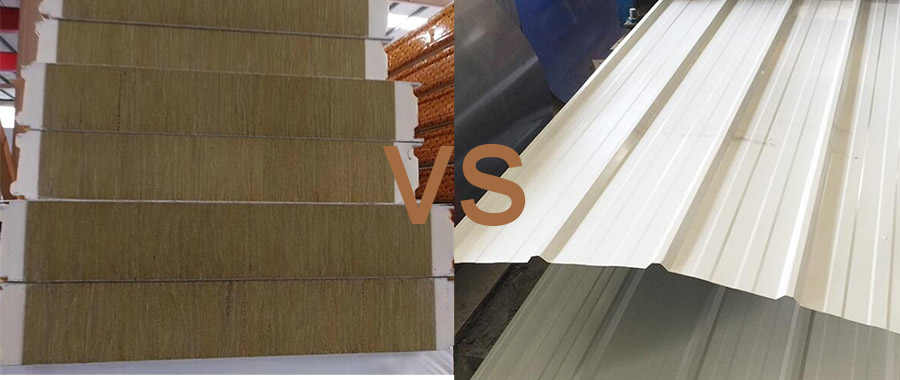
Comparación entre paneles sándwich y láminas de acero prelacado
|
Dimensiones de comparación |
Paneles sándwich |
Chapa de acero coloreada |
|
Definición estructural |
Panel compuesto (dos capas de láminas metálicas + material de núcleo) |
Panel monocapa (una sola capa de chapa de acero con recubrimiento de color) |
|
Funciones principales |
Excelente aislamiento térmico, que combina las funciones de cerramiento y aislamiento; |
PAG Principalmente para estructuras de cerramiento, bajo rendimiento de aislamiento (requiere una capa de aislamiento adicional). ; |
|
Ámbito de aplicación |
Ampliamente aplicable, apto para la construcción de techos y paneles de pared; |
más limitado, utilizado principalmente en la construcción de edificios con estructura de acero. ; |
|
Propiedades físicas |
Buena dureza, estructura estable; su diseño estructural único previene eficazmente las fugas en las juntas; |
L Material ligero, instalación flexible, pero propenso a fugas en las juntas. ; |
|
Reparación y vida útil |
Método de fijación seguro y razonable, larga vida útil general; |
Alta eficiencia de instalación, pero la durabilidad depende relativamente del espesor del recubrimiento y del mantenimiento. ; |
|
Características de construcción |
Combina características estructurales y funcionales, reduciendo los procesos de aislamiento posteriores; pérdidas controlables durante el transporte; |
A Altura de la chapa ondulada ajustable según las necesidades del edificio; funciones integradas de prensado y elevación. |
|
Economía y escenarios |
Mayor coste total, adecuado para edificios con requisitos de control de temperatura y protección contra incendios (como cámaras frigoríficas y salas blancas). |
Menor coste, adecuado para fábricas y almacenes comunes con bajos requisitos de aislamiento. |
Mediante una comparación exhaustiva de la estructura, las propiedades físicas y el ámbito de aplicación de los paneles sándwich y las chapas de acero prelacado, se observa claramente que, si bien ambos son materiales importantes para el cerramiento de edificios con estructura de acero, sus funciones son completamente diferentes. Las chapas de acero prelacado, gracias a su rápida instalación y sus ventajas en cuanto a costes, se han convertido en la opción preferida para el revestimiento de fábricas y edificios temporales; mientras que los paneles sándwich, con su excelente aislamiento térmico y estabilidad estructural, predominan en áreas con estrictos requisitos de control de temperatura, como cámaras frigoríficas y salas blancas. En la práctica, ambos materiales no son contradictorios, sino complementarios. Solo seleccionando racionalmente el material más adecuado en función de los requisitos funcionales del edificio, el clima regional y las limitaciones presupuestarias se pueden maximizar los beneficios económicos sin comprometer la calidad de la construcción.
Para obtener más información o para cualquier consulta, no dude en ponerse en contacto con el equipo de Yumisteel.
años de experiencia



 Servicio en línea
 +86-592-6095031
 manager@yumisteel.com
 Alina_Yuki
 +8613559086380+8615860744964
 español
 English
 русский
 português
 日本語
日本語