
En las selvas tropicales monzónicas del sudeste asiático, las zonas costeras ventosas o las áreas interiores que son húmedas todo el año, la humedad y la lluvia no son solo características climáticas, sino también fuerzas fundamentales que dan forma a la vida de los edificios. edificios prefabricados con estructura de acero Los desafíos aquí son claros y serios: la humedad generalizada acelera la corrosión electroquímica del acero, y las diferencias severas de temperatura condensan las gotas de agua en la superficie del metal y dentro de la envoltura, y la sinergia entre los dos erosiona silenciosamente la integridad y el rendimiento del aislamiento térmico de la estructura, poniendo a prueba la durabilidad a largo plazo.

¿Qué diseño es la clave para garantizar la vida del edificio?
1. Diseño anticorrosión
En lugares húmedos, el acero es el que más teme a la oxidación. Debemos aplicar una gama completa de “ armadura " para ello.
1.1. Use dos capas de "ropa protectora"
La primera capa: una armadura de sacrificio ajustada (galvanizada por inmersión en caliente)
Una vez que todos los componentes de acero estén listos, tome una “ baño de zinc " y recubrirlo con una capa de zinc. Esta capa de zinc tiene una gran capacidad: si la “ armadura " se raya para revelar el acero, lo hará “ sacrificarse activamente " se protege antes de que el acero se oxide, protegiendo así el acero interior de cualquier daño.
La segunda capa: una "capa exterior" resistente (recubrimiento de alto rendimiento)
Sobre la capa galvanizada se aplican tres capas más de pintura especial, como si se pusiera un impermeable resistente.
▪ Imprimación (pintura epoxi rica en zinc): Sujete firmemente la capa galvanizada para formar una base sólida.
▪ Pintura intermedia (pintura de hierro con nube epoxi): como una capa gruesa de "capa de armadura", aísla aún más la humedad y la corrosión.
▪ Capa de acabado (pintura de poliuretano): La capa "protectora solar y resistente a la lluvia" más externa, que no solo es hermosa, sino también resistente a la exposición al sol y a la erosión de la lluvia.
1.2. Centrarse en proteger los "eslabones débiles"
Las juntas y esquinas de los edificios, al igual que las axilas y los escotes de la ropa, son las más propensas al agua y la humedad, por lo que tenemos que :
▪ Protección espesa: Pinte con unas cuantas capas más de pintura en estos lugares para hacerla más espesa.
▪ Haga un buen trabajo de sellado: use un buen sellador para bloquear el espacio y evitar que entre agua.
▪ Evite los callejones sin salida en el diseño: trate de no diseñar rincones y grietas en los que sea fácil acumular agua y que sean difíciles de inspeccionar y reparar en el futuro, a fin de reducir los problemas desde la fuente.
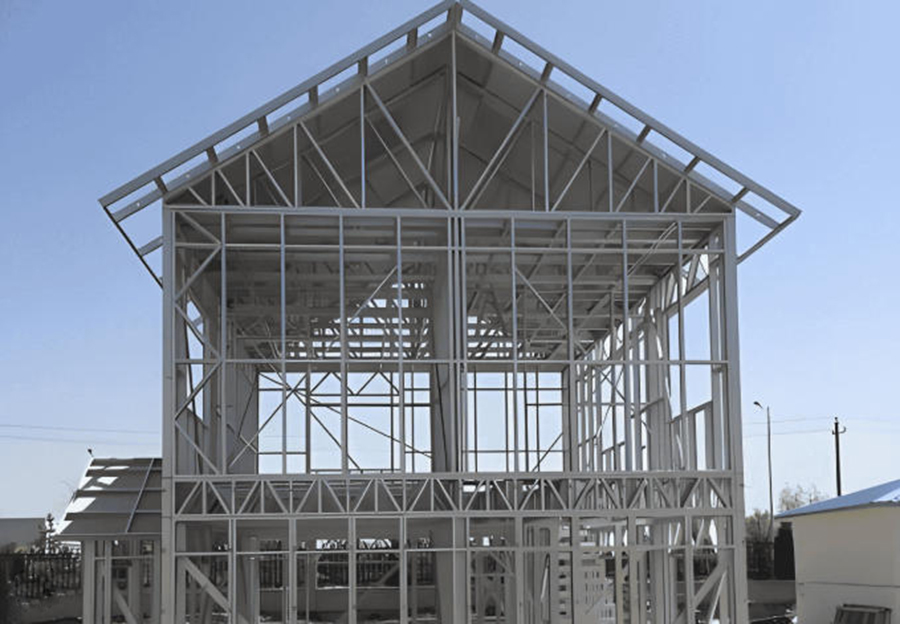
2. Diseño de drenaje e impermeabilidad
2.1. Crear un techo que no acumule agua.
☆ Hacer el techo más inclinado
▪ Cómo hacerlo: Hacer la pendiente del techo más pronunciada (se recomienda que no sea menor a 1:4, es decir, cada nivel avanza 4 metros y la altura sube 1 metro).
▪ Por qué: La pendiente es demasiado pronunciada y el agua de lluvia fluye rápidamente como un tobogán, por lo que es demasiado tarde para acumularse, lo que reduce en gran medida el riesgo de fugas de agua.
☆ Minimiza las costuras y séllalas lo más fuerte posible.
▪ Modo de empleo: Intentar utilizar paneles de tejado de gran longitud para reducir las juntas de unión horizontales. Todas las superposiciones que deben existir entre las placas deben estar selladas herméticamente con el mejor sellador.
▪ Por qué: Cuanto menos costuras, menor será la posibilidad de fugas de agua. Una vez realizado el sellado, es como poner cinta impermeable en las costuras, que son impermeables al viento y a la lluvia.
☆ Elige uno " sistema de techo "más seguro"
▪ Cómo hacerlo: Dar prioridad al sistema de techado con costura vertical.
▪ Por qué: Las costuras de este sistema son verticales y se cierran mediante mordida mecánica, al igual que las hebillas verticales de nuestra ropa, que son mucho más resistentes a la intemperie que las tablas apiladas planas comunes (tan simples como las baldosas) y pueden evitar eficazmente que el agua de lluvia sea arrastrada hacia las juntas por el viento.
2.2. Planifique un conjunto de canales de drenaje de gran capacidad.
☆ Las zanjas de drenaje y bajantes deben ser "suficientemente grandes y resistentes".
▪ Cómo hacerlo: Diseñe de acuerdo con la cantidad máxima de lluvia y utilice canaletas y bajantes de tamaño suficiente. Instálelos firmemente y asegúrese de que el agua finalmente se dirija lejos de los cimientos del edificio.
▪ Por qué: Cuando llueve mucho, mucha lluvia fluirá del techo instantáneamente. El sistema de drenaje debe ser “ comestible", de lo contrario el agua se desbordará. Desviar el agua de los cimientos puede protegerlos de la erosión y el remojo.
☆ Dead knock "detalles impermeables"
▪ Cómo hacerlo: Debes dedicar mucho esfuerzo para tratar las juntas de todas las partes penetrantes del techo, como :
La unión del tejado y el hastial
Por dónde salen los respiraderos, chimeneas y tuberías
▪ Por qué: Estos lugares son los "ojos de los agujeros" más frágiles de toda la capa impermeable, y la mayoría de las fugas de agua ocurren aquí. El uso de materiales impermeables de alta calidad y una fina artesanía para sellar completamente estos nodos es la máxima prioridad de la impermeabilización.
3. Diseño anticondensación y ventilación.
El vapor de agua en el aire húmedo es como un problema invisible y se condensará en gotas de agua cuando toque la estructura de acero fría. Esto provocará óxido interno, moho y fallas en la capa de aislamiento.
3.1. Interior: pegar una película plástica impermeable al vapor.
▪ Qué hacer: En el lado interior de la capa de aislamiento (mirando hacia el lado interior) se debe colocar una capa de barrera de vapor completa y sin daños.
▪ Por qué: Esta membrana puede bloquear eficazmente que el aire cálido y húmedo del interior (como el vapor de agua de la respiración y la cocina humana) penetre en la cavidad interna de la pared o el techo, y evita que se forme condensación en la fuente.
3.2. Aislamiento y ventilación: cooperan entre sí para evitar la humedad.
☆ Elija materiales de aislamiento que sean “ No le teme a la humedad ":
▪ Qué utilizar: Se prefieren paneles sándwich de poliuretano/lana de roca de grado B1 o superior.
▪ Por qué :
|
Poliuretano |
El interior es una estructura cerrada de "pequeña burbuja", que apenas absorbe agua y el rendimiento de aislamiento térmico se puede mantener de forma estable en ambientes húmedos. |
|
lana de roca |
Es un material no combustible de grado A, que tiene una fuerte hidrofobicidad y no es susceptible a la humedad. |
Ambos pueden mantener un efecto de aislamiento térmico confiable durante mucho tiempo en un ambiente húmedo y evitar la formación de puentes térmicos.
☆ Deja que el aire fluya y elimine la humedad. :
▪ Ventilación natural (comúnmente utilizada para ahorrar dinero): Utilizando el principio de " Para que el aire caliente suba, instale un ventilador (salida de aire) en el techo y deje una entrada de aire debajo del alero. De esta manera, se puede formar un flujo de aire continuo y el aire caliente y húmedo acumulado debajo del techo se puede descargar de forma natural.
▪ Ventilación mecánica (necesaria para entornos con alta humedad): para talleres, almacenes y otros lugares donde se generará mucha humedad en el interior, se deben instalar ventiladores de extracción forzada para extraer de manera activa y contundente el aire húmedo y controlar estrictamente la humedad interior.
4. Selección de materiales y detalles
☆ Piezas pequeñas, piezas grandes (conector)
Todas las piezas pequeñas, como pernos y tornillos autorroscantes, deben estar hechas de acero galvanizado en caliente o acero inoxidable. No dejes que estas pequeñas cosas se oxiden primero, de lo contrario, no importa cuán fuerte sea la estructura principal, se aflojará y saldrá mal.
☆ Ponerse “ botas impermeables " para la pared (estructura de la pared)
En la parte inferior del muro, junto al suelo, construya un pie de muro de hormigón de 30 a 60 cm de alto. Puede ser como una bota, bloqueando la humedad que regresa del suelo, así como el barro salpicado por la lluvia, y protegiendo directamente la pared de placa de acero de arriba de la corrosión por humedad.

Bajo la eterna prueba de la humedad y la lluvia, la permanencia a largo plazo de un edificio con estructura de acero prefabricada no es de ninguna manera una victoria de un solo material, sino el resultado de una defensa sistemática en todo momento. Comienza con una filosofía de diseño fundamental: el edificio en sí mismo se considera un sistema de vida orgánico, y sus huesos (recubrimiento anticorrosivo), piel (drenaje e impermeabilidad) y sistema respiratorio (anticondensación y ventilación) deben trabajar juntos para combatir la invasión de humedad.
Si tienes alguna pregunta , ¡Póngase en contacto con el equipo de Yumisteel para obtener soluciones personalizadas! ¡Gracias!
años de experiencia



 Servicio en línea
 +86-592-6095031
 manager@yumisteel.com
 Alina_Yuki
 +8613559086380+8615860744964
 español
 English
 русский
 português
 日本語
日本語